Original desk analysis of cited primary-source reports. No first-hand inspection or transaction participation is claimed.
WHY IT MATTERS
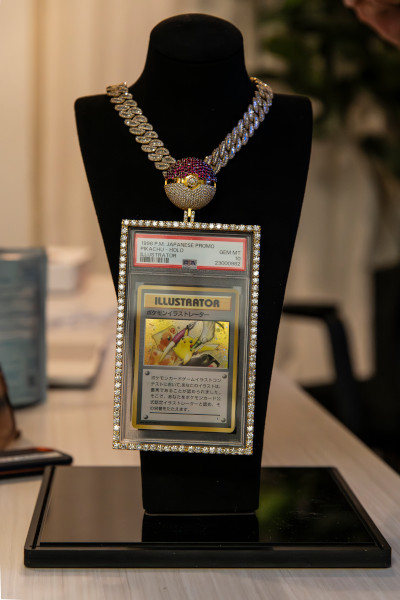
Preserve the $16.492m total, $13.3m hammer and buyer premium. A necklace accompanied the card, but no separate price allocation was reported and its value should not be added to the total.
Event date: . This article’s publication date is shown separately above.
Start with what changed hands
The useful question about a spectacular card sale is often smaller than the headline: what exactly did the buyer acquire? Guinness World Records reported that Logan Paul’s PSA GEM MT 10 Pikachu Illustrator sold through Goldin for $16,492,000 in February 2026. Its account gives a $13.3 million winning bid, with the published total including buyer premium. A diamond necklace accompanied the card, with hand delivery also reported. The total equals hammer plus premium; the source does not allocate a separate price to the necklace. Those details belong beside the price whenever this result is reused.
This is a transaction involving a particular graded object and documented accompanying items. A chart that removes the holder, provenance and sale terms can remain numerically accurate while becoming less useful for comparison. The right starting point is the complete sale record. Only then should a collector decide whether it tells them anything useful about a different card they might buy.
The earlier transaction was partly a trade
Guinness dates Paul’s earlier acquisition to July 22, 2021, and records consideration of $5.275 million. That comprised $4 million cash and a PSA 9 Illustrator acquired for $1.275 million. The 2021 event therefore belongs in a cash-and-card trade category. Treating the entire amount as a cash transfer erases how the exchange was structured.
Trades can be legitimate market evidence while answering a different question from open bidding. Their usefulness depends on the valuation assigned to the surrendered property, the date of that valuation, and whether any other terms affected the deal. For an ordinary collector trading several slabs toward one major card, the practical lesson is to preserve the itemized agreement. A single combined number becomes difficult to interpret later when the traded cards move independently or when someone mistakes the deal for a cash comp.
A prize card is a different collecting lane
Illustrator’s identity also deserves room in the story. Guinness identifies it as a Japanese illustration-contest prize associated with 1998, featuring Atsuko Nishida’s artwork. That origin separates it from a regular expansion chase card. Its cultural appeal may reach the same Pokémon audience, but the route into collectors’ hands and the nature of its scarcity are different.
A collector can enjoy both lanes without pretending they share one valuation model. Expansion collecting offers checklists, related artworks and a choice among many surviving copies. Prize-card collecting puts greater emphasis on the award context and the history of individual examples. Neither requires the other to rise in price. A headline about an extraordinary prize does not establish that an English modern special illustration rare has become scarcer, easier to sell or more desirable to the people who collect it.
Keep the record attached to its date
Guinness adjudicated the auction and described it as a trading-card auction record at the time. That is a strong, attributable statement. It is different from publishing an undated “most expensive card ever” label that survives every subsequent market event. Historical record holders should retain the date on which the record was established and the authority that recognized it.
Even the day requires care here. The Guinness overall-record page and news report use February 16, 2026, while the Pokémon-specific page has February 15 in one structured field and February 16 in its prose. RippingPatrol follows February 16 and records the discrepancy. This small piece of housekeeping prevents a false contradiction from becoming a second story. It also shows why event dates, source publication dates and the date of this analysis should remain separate fields.
What an ordinary collector can take from it
The result offers a useful lesson in collecting objects precisely. Keep the exact edition, grader, grade, certificate evidence, sale venue and price basis together. If a package includes something besides the card, preserve that fact too. These habits scale down to a modest purchase because identification errors and fee surprises do not require a million-dollar budget.
The less useful response is to turn the sale into a promise about the rest of the hobby. One intense auction is evidence of demand for that offered lot under those conditions. It is not a reliable measure of liquidity across Pokémon, a forecast for the next auction, or an argument for increasing a pack-opening budget. The card can remain an extraordinary collectible while the analysis stays disciplined about what its sale proves.
