Original desk analysis of cited primary-source reports. No first-hand inspection or transaction participation is claimed.
WHY IT MATTERS
Preserve Alpha and CGC Pristine 10, label the result a reported April 2024 private sale, and do not reuse its dated population claim as a current census.
Event date: . This article’s publication date is shown separately above.
Begin with Alpha, then the grade
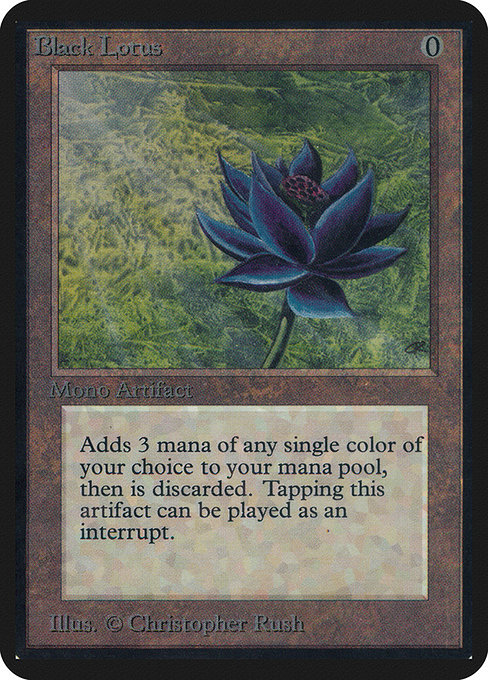
CGC reported in April 2024 that a Limited Edition Alpha Black Lotus, graded CGC Pristine 10, changed hands privately for $3 million. Its announcement identifies Adam Cai of Pristine Collectibles and an undisclosed buyer. The original report was published on April 29; a later CGC account places the transaction in April without supplying a closing day. Those are the supported particulars of this entry in the card’s market history.
The edition name matters before the amount. Black Lotus appears in materially different printings and collectible formats. An Alpha example cannot be made comparable to another version simply by cropping a picture to the familiar flower artwork. A card catalog should preserve the printing, language, finish where relevant, certification and any autograph or modification. That identity work is what allows the sale to inform a collector rather than merely impress a reader.
The grading words are part of the identifier
“Pristine 10” should be carried through in full. Reducing it to “a ten” discards the label distinction used by the source and encourages comparisons across grading systems that may not mean the same thing. A collector evaluating another card needs the exact grader and designation, not a rounded shorthand borrowed from a headline.
The same discipline applies to cards that have been reholdered, crossed between grading services or photographed in older holders. The visible label and the certificate evidence should agree with the listing being evaluated. An older auction image can be valuable history while no longer describing the object’s current certification state. If the record has changed, retain both dated states rather than silently rewriting the earlier transaction. That preserves the history without pretending a later assessment was available to the earlier buyer.
A private transaction has different visibility
CGC is the primary source for its own announcement and the grading information it supplies. The public account is still a report about a privately negotiated transaction. It does not provide an open bid ladder, the buyer’s identity or an itemized settlement. The correct description is a reported private sale, with those limits visible.
This need not turn the story into a contest between “real” and “unreal” prices. A private deal can be consequential while exposing fewer details than an auction. The analytical question is what can be independently reconstructed. An auction may reveal competitive bids and a published premium; a private agreement may bundle terms that remain undisclosed. If those differences are preserved in the data, readers can use each kind of evidence appropriately. If they are erased, an attractive chart can imply certainty the underlying reports never offered.
Population claims should not fossilize
CGC’s April announcement described the card as the sole Pristine 10 Alpha Lotus in its population report at that time. A later October 2024 article reported another Pristine 10 and discussed the earlier sale. That sequence is a useful reminder that population statements have observation dates. A launch article should not reuse an old “only one” claim as though it were checked today.
Population growth also requires interpretation. A tally of certifications is not automatically a census of all physical copies in existence, and a new high-grade submission does not tell us what owners of existing copies will do. For an edition collector, the immediate value of a population report is to understand the available certification data and its categories. A forecast about future scarcity would need considerably more information. The most reliable editorial choice is to state the dated observation and link readers to the live source when they need a current count.
Build an edition study before a price ladder
A rewarding Black Lotus collection does not have to begin at the most expensive end. It can begin with understanding how the Alpha issue is identified, how adjacent early printings differ, and how later commemorative products are labeled. Reference images and issuer or specialist catalogs help establish those distinctions. Physical authentication remains a separate task that cannot be completed from a tiny online thumbnail.
Within that study, condition and presentation become informed preferences. Some collectors want an early game object with visible handling history; others prioritize an exceptional surviving example. An artist signature, if present on a different card or its holder, adds another separate description rather than disappearing into the word “Lotus.” The aim is to make the collection’s scope explicit. A price ladder assembled from unlike versions obscures that scope and can make a coherent personal project look like an incomplete attempt at somebody else’s trophy collection.
What the landmark leaves open
The $3 million report belongs in a historical sales registry because it identifies a card, grade, consideration and transaction type through a relevant primary source. It should carry a month-level event date, a publication date and an undisclosed-fee note. It should not become an automatically refreshed valuation for every copy with similar artwork.
Nor does the transaction demonstrate a return that another buyer could reproduce. Access to a buyer at a particular moment, the condition of a specific object and the terms of a private deal are all part of the event. Collectors can appreciate the milestone while deciding what evidence would be needed for their own purchase. That balance makes the history more useful: the celebrated result remains visible, and the distinctions that give it meaning remain intact.