Alpha is the collecting subject
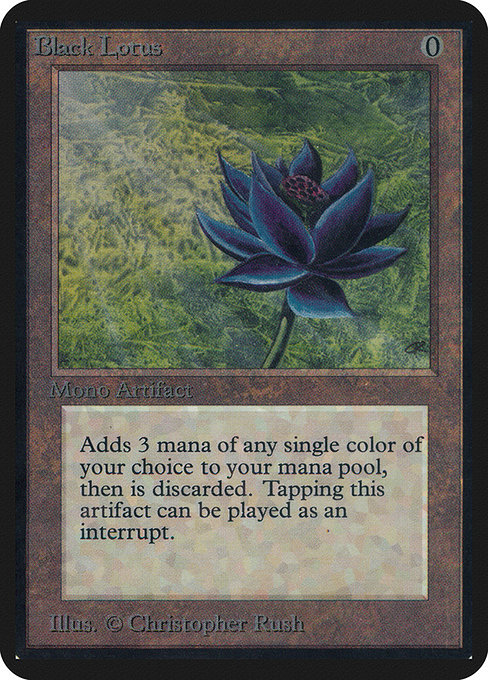
This entry concerns Black Lotus from Magic’s 1993 Limited Edition Alpha, with Christopher Rush’s artwork. Alpha, Beta and Unlimited are separate printings; a card with the name Black Lotus is not automatically an Alpha example. The edition is the foundation of the record, with condition and certification added after identification.
The number 232 used by Scryfall is a catalog identifier for this printing. It should not be described as a modern collector number printed on the original Alpha card. This distinction matters when a database built around contemporary Pokémon cards is adapted to early Magic. A useful catalog preserves the differences between products instead of forcing every object into the same visual checklist assumptions.
Edition recognition is not authentication
Alpha’s corner shape is a relevant identification feature, but it is not a complete authentication test. Print characteristics, dimensions, alterations and provenance require appropriate expertise. A photograph showing rounded corners cannot establish that a card is a genuine unaltered Alpha Lotus. Nor does the existence of a matching name in an online catalog authenticate the physical item being offered.
Keep Collector’s Edition and later commemorative or non-tournament products distinct from original production cards. If a card or holder has been signed, record where the signature appears and what authentication accompanies it. Those details can materially change the collecting object. A sale of a signed holder should not silently become a comp for an unsigned raw card simply because both display the same central artwork.
A landmark sale is context, not a default value
CGC’s reported $3 million private sale in April 2024 concerned one Alpha copy graded Pristine 10. That grade, transaction type and date must remain attached. It does not establish the value of every Alpha example, and its dated population claims should not be repeated as a current census.
A historical Magic collection can emphasize edition study, original artwork or the experience of early game objects. A condition-focused collection can pursue a different aim. Decide what is being collected before using a trophy sale to set expectations. The most useful Lotus page is one that helps a reader distinguish versions and understand the evidence around an offered example, while keeping price history tied to precisely identified transactions.
Inspect the actual example
- Verify Alpha edition through a qualified authenticator or trustworthy documented provenance.
- Distinguish damage, trimming and restoration from an ordinary numerical grade.
- Compare the exact edition and grade, not a generic Black Lotus headline.
Nearby prints to distinguish
- Limited Edition Beta Black Lotus
- Unlimited Edition Black Lotus
- Collector’s Edition and other non-tournament reproductions