A small change in an early image matters
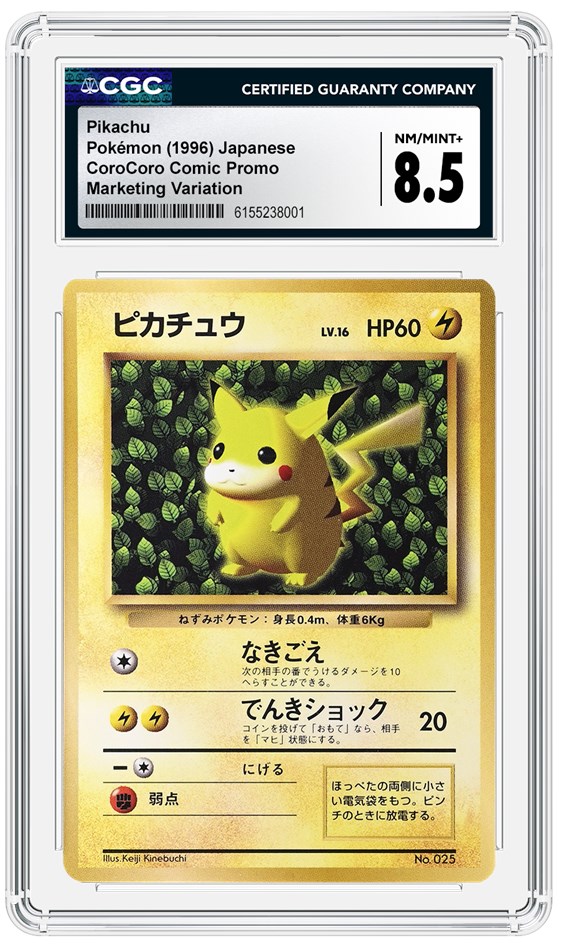
The 1996 Japanese CoroCoro Pikachu known as the Glossy Marketing Variation is a study in why a character nickname is insufficient identification. CGC distinguishes it through the artwork and illustrator credit. Leaves beneath Pikachu’s left foot, the character’s shifted position and Keiji Kinebuchi’s credit separate this version from nearby early Pikachu material.
That is a different collecting exercise from choosing a favorite modern illustration. The interest lies in tracing how an image appeared in promotional material and how the card’s form relates to its better-known relatives. The details are part of the story, rather than minor obstacles on the way to a price.
Read the image and the credit together
A useful inspection begins with an uncropped front photograph. Locate the leaves, compare the position within the art box and read the illustrator line. These features should be checked as a group against the cited specialist account. A seller highlighting one recognizable detail has not necessarily established the complete variation.
Then consider the object itself: its finish, reverse, condition and any grading-company identification. A glossy surface can hide marks in a flattering photograph, so one angle is inadequate for condition assessment. Where the item is certified, preserve the exact variation wording from the label alongside the certification number.
Do not merge the early variants into one price series
The related sale report separates Marketing Variation from Incorrect Illustrator. Keep those catalog designations distinct in a want list or sale comparison. Shared artwork and the nickname “Ivy” do not make them interchangeable. Follow the linked reporting for the separately attributed transactions and their evidence limits.
The Card Bound Collection copy in the reported private sale was graded CGC 8.5. Its pedigree belongs to that example, not to every card of the variation. Similarly, historical statements about how many CGC had certified describe that company’s reported population at that time, rather than an independently established total surviving supply.
Use the early material as a research trail
The appeal of this card extends beyond ownership. A collector can study how publishers introduced Pokémon through magazine pages, promotional images and final card issues. The process rewards precise captions: identify what an image shows and distinguish a printed card from an image of a card appearing elsewhere.
The associated sale report supplies a notable case study, while its closing day and private fee terms remain undisclosed. Keep that evidence limit attached to the result. The profile’s purpose is to make the correct variation recognizable in research, without implying that every early Pikachu found in a collection carries the same history or value.
Inspect the actual example
- Inspect the leaves beneath Pikachu’s left foot and the shifted artwork position described by CGC.
- Read the Keiji Kinebuchi illustrator credit and exact grading-label variation.
- Inspect the actual glossy surface and reverse, not just the best-known front image.
Nearby prints to distinguish
- Glossy Incorrect Illustrator variation
- Other Japanese CoroCoro Ivy Pikachu variants
- Printed promotional images of a card rather than the card itself