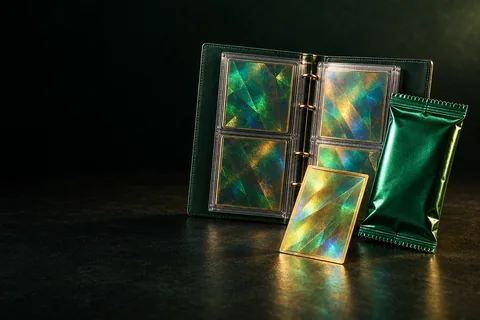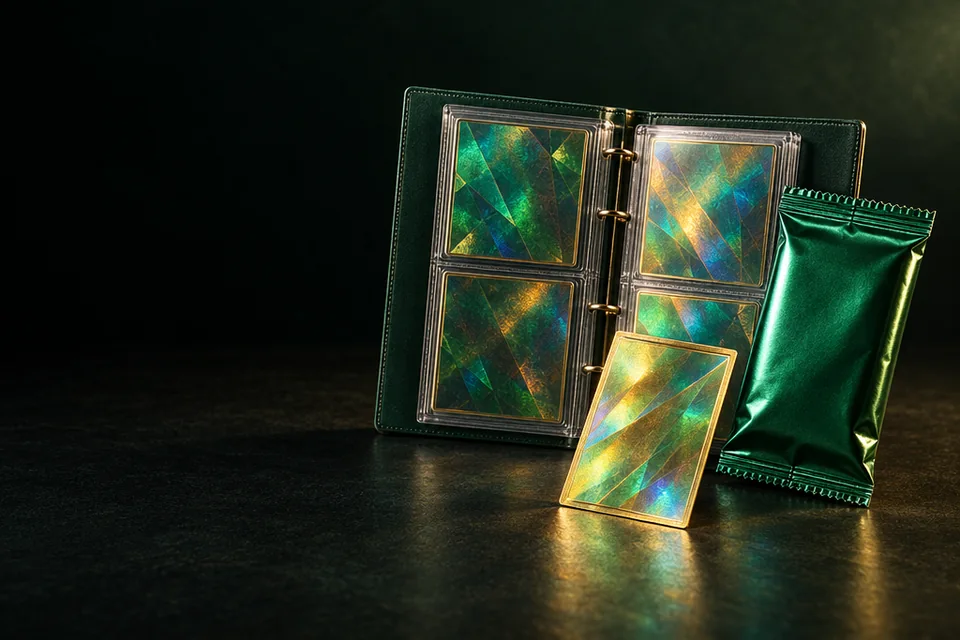
Start with a Pokémon, a set or an idea
A collection becomes more interesting when it has a point of view. You could build a page around Eeveelutions, follow an illustrator, collect cards from the games you grew up with, or explore a single expansion. A theme helps you judge an online pack by the cards it can actually add, rather than the loudest animation.
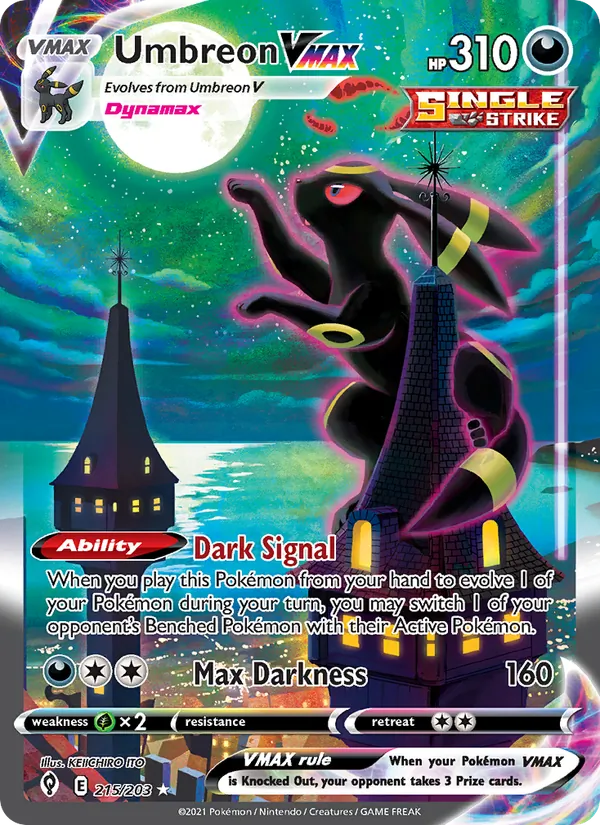
If the goal is one exact printing, record the card number and set before searching. Umbreon is a character, not a unique card identity. Names, artwork, language and rarity can overlap across products, making a precise search much more useful.
A booster and a curated pull are different products
A manufacturer booster belongs to a defined expansion and product configuration. A curated single-card pull or graded-card mystery pack uses a pool selected by an operator. Its Pokémon theme does not turn it into an official sealed booster from a particular set.
An online service may also recreate a pack-style reveal without opening a sealed booster on camera. Read how cards are selected and fulfilled. A pictured Evolving Skies wrapper, for example, needs accompanying product details before you can understand exactly what is being purchased.
Know which cards can enter your collection
Check the pool or checklist for language, set, condition and whether cards are raw or graded. For a graded pull, find out whether multiple grading companies and grades share the same pool. For raw cards, read the stated condition and substitution rules.
The official Pokémon database is a useful starting point for identifying an expansion or printing. Operator inventories answer a different question: what that particular product can provide now. A card appearing in a set guide does not establish that it is currently available from every service covering Pokémon.
Use the card number as the start of the search
A Pokémon's name can lead to years of different artwork, languages and product types. Build a search from the name plus the set, collector number and language. Add the treatment where it matters. The official card database is a useful identity reference, while the seller's photographs establish which individual copy is on offer. Keep those two roles separate when comparing listings.
For a character collection, start a small checklist of the versions you actually want. You might choose one illustration for each evolution, cards by a particular artist, or a limited set of releases from one era. An unrestricted character search can grow into a project with no clear ending. Writing down the boundaries makes it easier to enjoy new discoveries without treating every variant as an obligation.
Read the product as well as the expansion
An expansion name does not identify every item sold around it. A booster, a collection box and a product with a guaranteed promotional card may offer different contents. Read the publisher's product description to establish which components are included. If an online seller offers only part of a product, confirm whether the promotional card, accessories and other packs are included or excluded.
This matters for collecting projects built around a particular illustration. If the desired card is a guaranteed component of a named product, searching random packs for it may misunderstand how it is distributed. If it is one possible booster outcome, the existence of the product does not guarantee it. Keep a separate note for distribution method: booster card, promotional release or another documented route.
Decide how duplicates will fit
Opening packs can produce cards you already own. Think about their role before treating every repeat as a failed opening. You might keep spare play copies, build a second binder page, trade locally or simply prefer buying singles for the remaining gaps. None of those options means an online provider must accept every duplicate at a particular value.
Illustrative example: a collector has filled seven spaces in a nine-card themed page. A random pack might be enjoyable discovery, but only a narrow subset of its pool completes the project. A direct purchase targets the missing spaces. Comparing these two activities by price alone hides the different jobs they perform. Use random opening for the experience you want, and use a precise checklist when completion is the priority.
Keep digital Pokémon collections identifiable
A familiar character does not make a digital game card a redeemable paper card. Record which game or service issued it and which expansion or collection it belongs to. Read trading and acquisition rules in that environment, because terminology borrowed from physical collecting can make the systems sound more alike than they are.
You can still build a coherent theme across them. Illustrative example: a physical binder of favorite Pikachu art and a digital collection of related illustrations share a creative idea, while remaining separate inventories. Track their progress separately and avoid using the physical card's sale price as the value of a digital item. The connection is the character and your interest in the artwork, not an assumed exchange rate between formats.
Enjoy the reveal with realistic expectations
Pokémon Support says that physical booster artwork features characters from the expansion rather than specifying the contents of the individual pack. For online products, read any displayed chase card in the context of its stated chance and eligibility.
Illustrative example: someone collecting nine favorite illustrations could put half a hobby budget toward a few openings and reserve the rest for singles. That creates room for surprise while still moving the binder toward a finished page. It is a collecting approach, not a forecast of what the packs will return.
Decide where the cards will live
If you want a physical binder, investigate delivery, packaging and the total cost of bringing several cards home. If you prefer graded display pieces, look for clear slab photographs and exact certification details. If you mainly want a digital collection and battles, Pokémon TCG Pocket offers a separate, officially described digital-card experience.
These routes can coexist. What matters is choosing deliberately and keeping their inventories distinct. A digital game card, an operator’s virtual balance and a physical Pokémon card are different things, even when the artwork makes them feel part of the same collecting world.
The questions collectors ask
Are online Pokémon pack sites all official Pokémon services?
No. Third-party pack platforms and official Pokémon games are distinct. Check the operator’s identity and the product description.
Can every Pokémon card in an expansion appear in every online pack?
No. A service may use a selected pool, a specific language or a limited product configuration. Read that pack’s contents and odds.
Does a Pokémon-themed repack contain cards from the expansion on its artwork?
Only if its actual product description establishes that. An operator may curate cards across several sets or grades. Check the current pool and item identifiers; promotional art is not a substitute for the contents list.
How should I plan a small Pokémon collection?
Choose a manageable boundary such as one binder page, one illustrator, a named set or selected versions of one character. Record exact print identities and decide which variants count. A collection can be complete on your own clear terms without including every release.