Choose the collection you want to look at
Eevee’s evolution family offers several ways to organize a binder. A character collector can follow one evolution across different eras; a set collector can focus on its appearances in a single expansion; an art collector can choose scenes that look good together. Those projects have different finishing lines. Decide which one matters before turning every new release into another obligation.
A useful starting statement is specific: one English illustrated card for each chosen evolution, or every Umbreon print in one named set. Leave room for personal favorites without pretending the collection must contain every expensive version to count.
Evolving Skies as one chapter
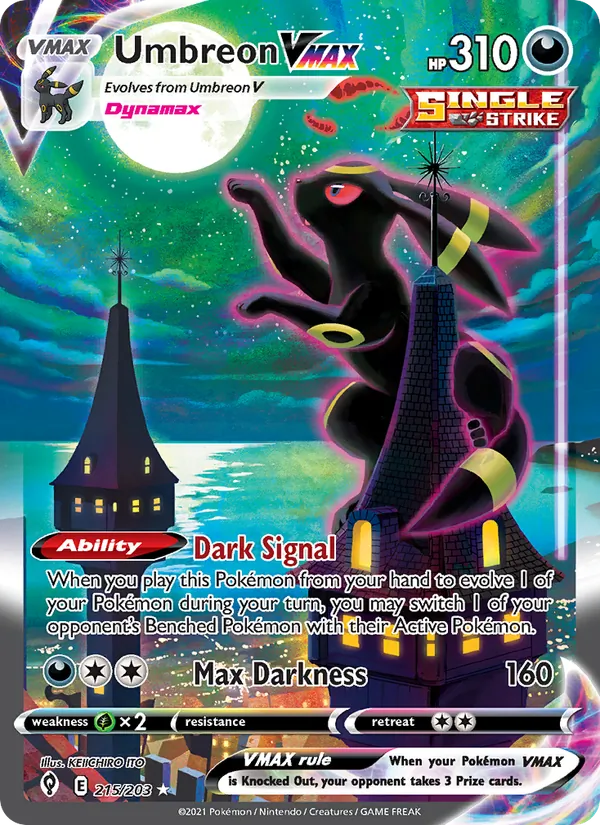
English Evolving Skies arrived on August 27, 2021, within the Sword & Shield series. Umbreon VMAX 215/203 is one recognizable point of entry, but it is a particular artwork and number, not the definition of the entire Eeveelution theme. Its moonlit scene makes it an illustration-led choice. The set also contains other Umbreon VMAX prints, so a search by character name alone can produce the wrong comparison.
Use the expansion as a bounded chapter in a larger collection. Finishing a small, personally chosen group can be more satisfying than continuously expanding a want list.
Keep languages and treatments intentional
English and Japanese cards can look closely related while carrying different set names and numbers. That does not make a mixed-language collection wrong; it means the choice should be deliberate. Record language, number and treatment beside the picture. For Umbreon, the English 215/203 identity must not silently become the Japanese Eevee Heroes 095/069 identity when prices are compared.
Choose raw cards for a binder or graded examples for a display according to how you want to enjoy them. A numeric grade is one collecting criterion, not a substitute for liking the card.
A nine-pocket family portrait
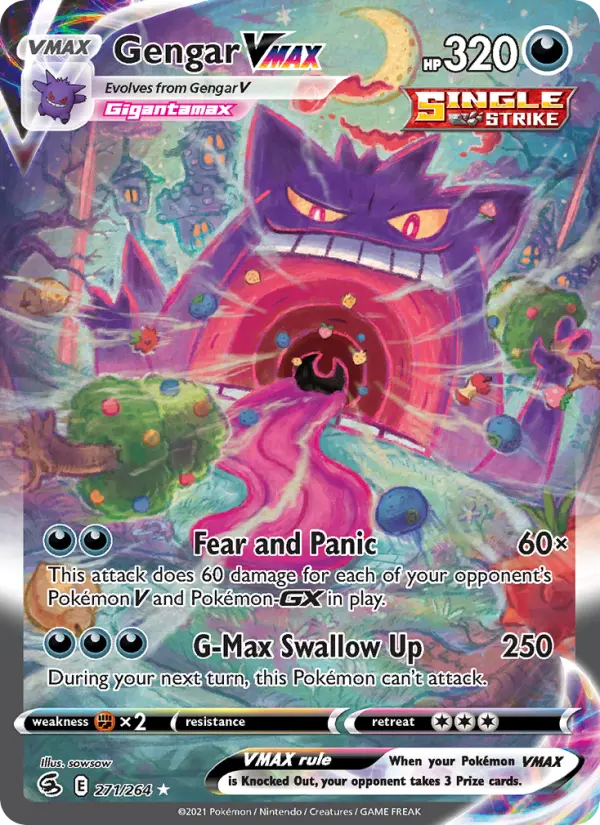
Eevee and its eight evolutions make a particularly satisfying nine-card project. Put Eevee in the middle, then choose one Vaporeon, Jolteon, Flareon, Espeon, Umbreon, Leafeon, Glaceon and Sylveon for the surrounding spaces. The rule is one character per pocket, not one rarity level per pocket. That allows a favorite ordinary illustration to sit beside a full-art card without making the page feel unfinished.
Before buying, arrange screenshots in the intended order. Compare background colors and the direction each Pokémon faces; a strong individual image can look awkward beside eight others. If matching borders or one language matter to you, make those project rules now. The page is complete when the nine chosen characters are represented, even if a different version becomes fashionable later.
Regular VMAX cards form a different project
The Evolving Skies checklist provides a concrete alternative to an all-alternate-art chase. Its ordinary numbered VMAX entries include Leafeon 008, Flareon 018, Vaporeon 030, Glaceon 041, Jolteon 051, Espeon 065, Sylveon 075 and Umbreon 095. A page centered on these entries has a consistent mechanic and one named English expansion behind it. It should be described as that selection, rather than every Eeveelution card in the set.
Umbreon 095 and the illustrated 215 are separate checklist targets. Buying one does not accidentally complete the slot for the other. A collector can deliberately choose 095 for the group page and reserve 215 for an individual display, instead of repeatedly replacing a card that already fulfills its original purpose.
Collect a mood across the family
The publisher’s Evolving Skies art feature highlights You Iribi’s Leafeon V among autumn leaves and Narumi Sato’s Glaceon V resting on an icy bench. Those images suggest a project organized around places or seasons. A warm woodland scene and a cool outdoor scene can make a compelling pair even before a third card enters the collection.
For this approach, write a short visual brief: outdoor settings, a calm pose and a visible environment, for example. Search the complete card image rather than judging a tightly cropped character thumbnail. The brief makes it easier to pass on a famous print whose composition does not fit, while noticing an unfamiliar card that does.
Keep each era as its own chapter
Evolving Skies is not the only way to collect the family. Pokémon’s Prismatic Evolutions coverage identifies all eight evolutions as Stellar Tera Pokémon ex in that later expansion. This creates an obvious two-chapter project: selected Sword & Shield-era representations alongside selected Scarlet & Violet-era representations. The changing mechanic and presentation become part of the story.
Keep the chapters separate in your checklist. A newer Umbreon ex is another collecting subject, not a replacement entry for Umbreon VMAX. You might collect all eight ordinary examples from one chapter and just a favorite from the other. Extending a collection by a deliberately limited chapter is easier to manage than reopening every completed page whenever a new family-themed release appears.
Decide what an upgrade actually improves
An upgrade can mean a cleaner copy, a different language, another illustration or a preferred holder. Those changes solve different problems. If the page already looks right, a higher numerical grade may improve a slab collection while doing little for a binder that you want to browse. If the composition is wrong, replacing it with the same artwork in better condition will not fix the layout.
Keep the original copy’s role in mind before trading it away. A childhood card, a first pull and a pristine purchased specimen can each have a place, but they need not all count toward the same nine-card target. Labeling those roles prevents sentimental keepsakes from turning a bounded project into an accidental completion chase.
Make the wish list useful
Arrange your want list by visual priority and a spending limit you set yourself. Add a note about why each card belongs, then mark whether an actual specimen has been inspected. A stock image can establish the desired artwork; it cannot establish condition. If you open packs, treat the opening as a separate experience from completing the collection. Buying a random pack does not guarantee progress toward the particular card you want.